
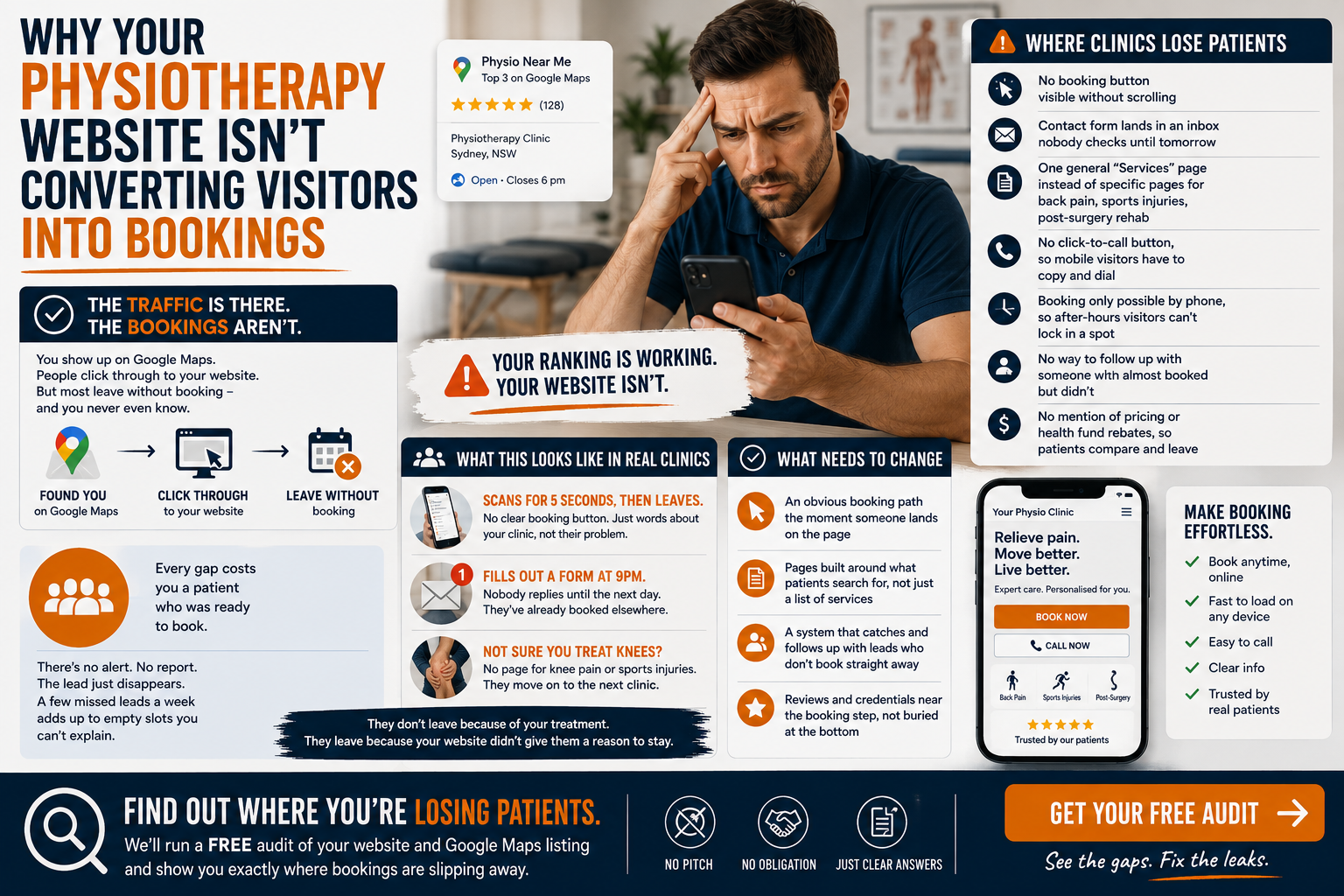
A physiotherapy clinic in Sydney's Eastern Suburbs sits in the top 3 on Google Maps for "physio near me." The phone still rings, but the booking calendar stays quiet. The owner assumes the problem is visibility — it isn't.
The Traffic Is There. The Bookings Aren't.
Most Sydney physio clinics have decent visibility. They show up on Google Maps. People search, find them, and click through to the website.
That part is working.
What breaks is everything after the click. A visitor lands on the site, looks around for a few seconds, and leaves. No booking. No call. No form. The clinic never finds out they were even there.
This isn't rare — it's the normal state for most clinics I look at. Reviews are good. Rankings are fine. The problem isn't traffic. It's what happens in the few seconds after someone arrives.
Where Clinics Lose Patients
Some of the more common gaps I see on Sydney physio websites:
- No booking button visible without scrolling
- A contact form that lands in an inbox nobody checks until the next business day
- One general "Services" page instead of separate pages for back pain, sports injuries, post-surgery rehab, or whatever you actually specialise in
- No click-to-call button, so mobile visitors have to copy and dial the number themselves
- Booking only possible by phone, so anyone searching after hours has no way to lock in a spot
- No way to follow up with someone who almost booked but didn't
- No mention of pricing or health fund rebates, so patients comparing a few clinics skip the one that doesn't say
Most owners check their own site once, on a laptop, when they're not in a hurry. Patients do the opposite. They're on a phone, comparing two or three clinics in different tabs, and deciding in seconds. What looks fine to you moves too slowly for them.
None of these show up as an error. Nothing crashes. The site looks fine to anyone who isn't trying to book. It just doesn't do the one job it actually needs to do.
What This Actually Costs You
Every gap on that list costs you a patient who was ready to book.
Someone searching for a physio is usually in pain, not browsing for fun. They don't wait around. If your site doesn't make the next step obvious in a few seconds, they go back to Google Maps and try the clinic underneath yours.
You don't get a notification when this happens. The lead just disappears, and the only sign, eventually, is a booking calendar that never quite fills up the way your Maps ranking suggests it should.
This adds up faster than most owners realise. A few missed leads a week doesn't feel like much on its own. Over a month, it's the difference between a full calendar and empty slots you can't explain.
What This Looks Like in Real Clinics
A patient taps through from Google Maps on their phone. They scan the homepage for five seconds. No booking button in sight, just a paragraph about the clinic's philosophy. They go back to the map and try the next result.
Someone fills out a contact form at 9pm about a shoulder injury that's been bothering them for weeks. The form sends an email to an inbox that gets checked once a day. By the time anyone replies, they've already booked with a clinic that called back the same night.
A visitor searches "physio for knee pain Sydney" and lands on your homepage. The site talks about physiotherapy in general, with no page specific to knees or sports injuries. They're not sure you actually treat what they need, so they leave and check the next listing.
None of these patients were lost to a competitor with better treatment, more experience, or lower prices. They were lost to a website that didn't give them a reason to stay, in the ten or twenty seconds they were actually looking.
What Needs to Change
Fixing this isn't about a full rebuild. It's about a few specific things:
- A booking path that's obvious the moment someone lands on the page, not buried three clicks in
- Pages built around what patients actually search for, not just a list of services you offer
- A system that catches the leads who don't book straight away, instead of losing them silently
- Reviews and credentials placed near the booking step, not buried at the bottom of the page
Where exactly your site is losing people, and what order to fix things in, depends on your current setup, your booking system, and how patients actually find you. Guessing at it usually means guessing wrong.
Find Out Where You're Losing Patients
If you want to know exactly where your website and Google Maps listing are costing you bookings, I'll run a free audit and show you.
No pitch. Just a clear picture of where visitors drop off before they book, and why.